
The Path Forward
A clear development sequence with defined milestones at every stage.
Development Roadmap
Phase 1
ACTIVER&D & Commercialization
2026–2030
- 60-month CRADA program with Argonne National Laboratory
- Advancing Landmark conceptual design to detailed engineering
- NRC pre-application and licensing support
- Site selection and environmental permitting
- Strategic partnerships to secure used fuel supply
Phase 2
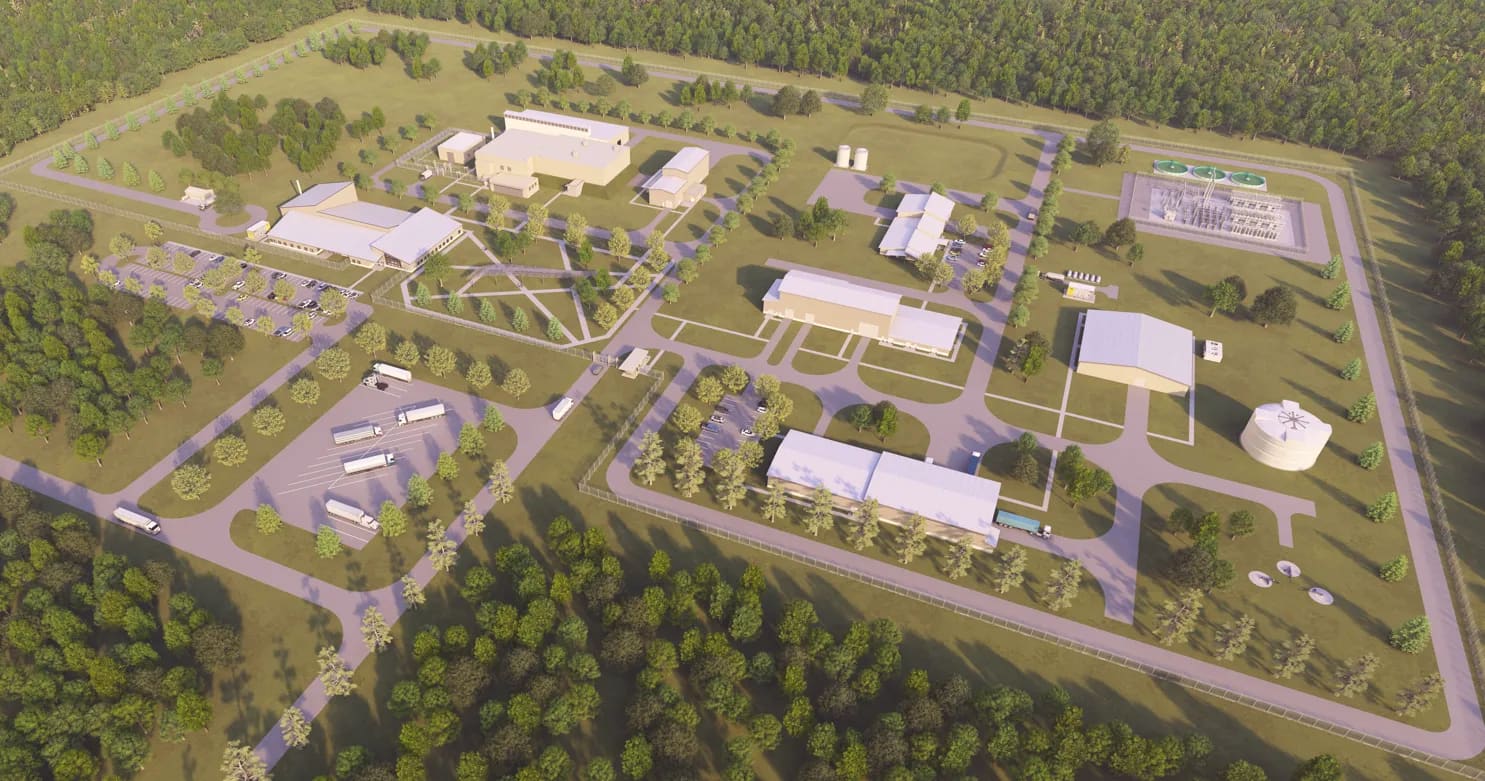
Pilot Facility
2030–2034 · 100 T/yr
- Licensing and construction of pilot-scale facility
- Commissioning and operations — begin used fuel recycling
- First advanced reactor fuel production with TRU material
- Target: Pilot Project in operation by 2034, subject to regulatory approvals and project funding
Phase 3
Commercial Scale
2035+ · 2,000+ T/yr
- Multiple commercial-scale processing facilities — oxides and metals
- Global fuel supply contracts
- International expansion with licensed BLSK technology
Sources: Chang deck slides 16–20, 25; CRADA scope; BLSK development plan
Each milestone is a concrete, verifiable event that advances the company toward commercialization.
NRC pre-application acceptance
Validates the licensing pathway and confirms regulatory engagement with the technology.
Site selection completion
Establishes physical location, unlocks environmental permitting, and demonstrates state/community support.
DOE cost-share or loan guarantee award
Confirms federal program alignment and support for the commercial pathway.
First offtake agreement signed
Documents customer demand with a binding commercial commitment from a reactor operator or utility.
Construction permit issued
NRC authorization to build — the single hardest regulatory gate in nuclear energy.
First hot operations
Demonstrates the technology at pilot scale with real used nuclear fuel. Proof of concept at commercial grade.
First commercial fuel delivery
Commercial operations begin. Transition from development-stage to operating company.
BLSK's Development Strategy
Phase 1: Planning & Design
Secure key personnel, site selection, regulatory engagement, strategic partnerships
Phase 2: Facility Construction
Pilot-scale facility construction, processing systems, logistics infrastructure
Phase 3: Commercial Scaling
Commercial-scale facilities, regional expansion, international market entry