BLSK Energy

How It Works

Proven with more than 60 years of research and development at Argonne National Laboratory. Ready to scale.

Proven with More Than 60 Years of Research and Development at Argonne National Laboratory. Ready to Scale.

Pyroprocessing is an electrochemical process that separates usable fuel material from used nuclear fuel:

  • Operates at high temperature using molten salts (no liquid chemicals, no high-pressure systems)
  • Recovers all actinides together — uranium, plutonium, and minor actinides — as a group, never as separated pure streams
  • This "group recovery" is inherently proliferation-resistant
  • Produces metal fuel usable in fast spectrum reactors
  • Generates waste forms with dramatically reduced long-term radioactivity
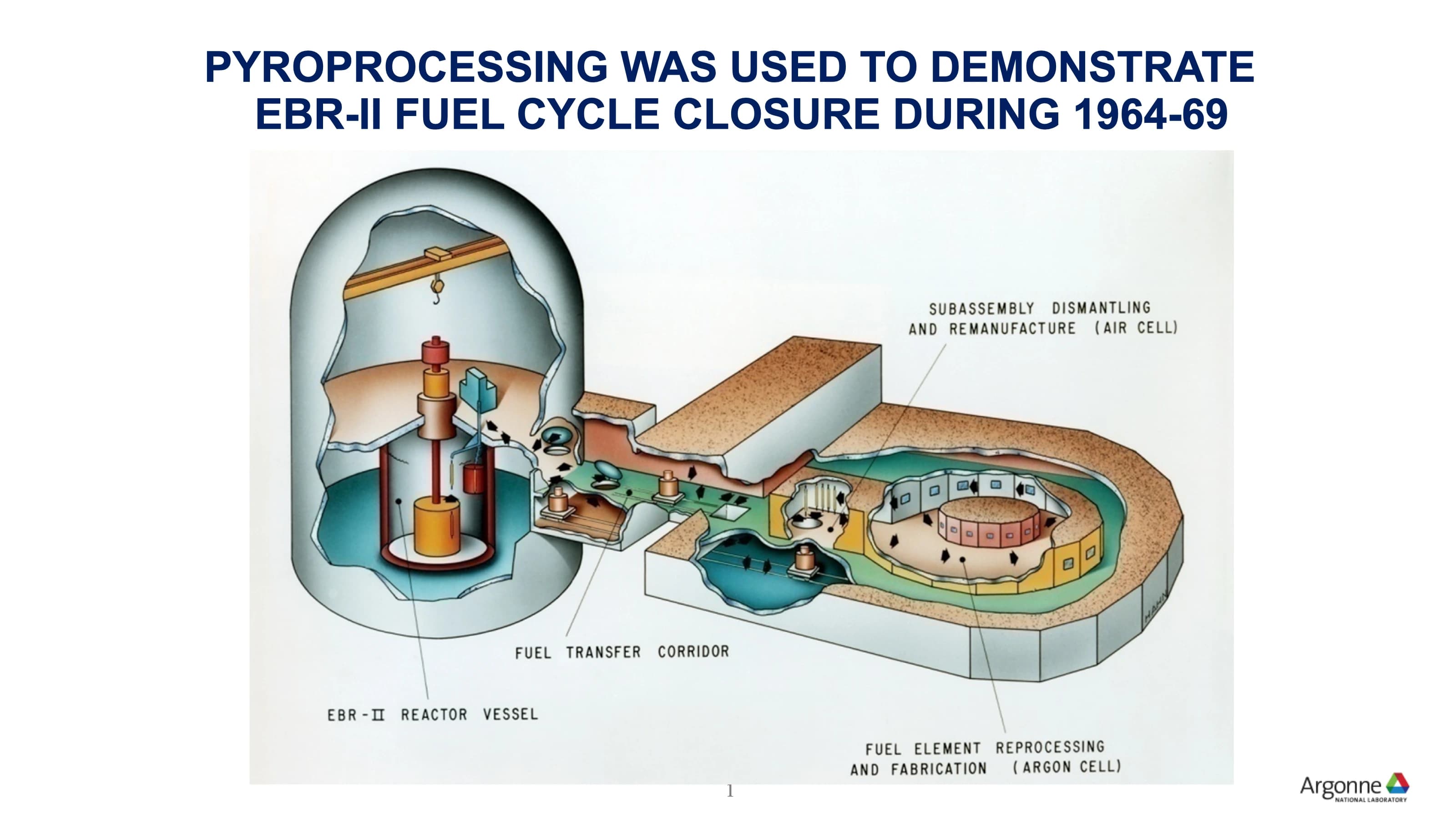
Cutaway diagram of the Integral Fast Reactor and Fuel Conditioning Facility showing EBR-II reactor vessel, fuel transfer corridor, and argon cell processing area
The integrated system: EBR-II reactor vessel (left), fuel transfer corridor, and fuel conditioning facility (right) where pyroprocessing occurs.

The Process in Plain Language

01

Chop & Load

Used fuel assemblies are chopped and loaded into an electrorefiner — a vessel of molten salt at ~500°C.

02

Electrorefine

Electric current dissolves the fuel and separates uranium and transuranic elements onto collection electrodes.

03

Process & Form

The recovered metals are processed through a cathode processor and formed into metal ingots for downstream fuel fabrication.

04

Isolate Waste

Fission products (the actual "waste") remain in the salt — they constitute only a small fraction of the original fuel mass and decay to background radiation levels in ~300 years.

05

Consolidate

The remaining metal waste is consolidated into stable, leach-resistant waste forms for storage.

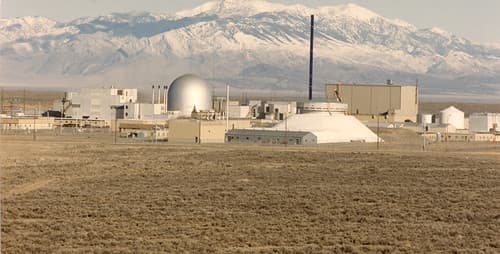
EBR-II reactor facility at Argonne-West, Idaho with snow-capped mountains
EBR-II Facility — Argonne-West, Idaho
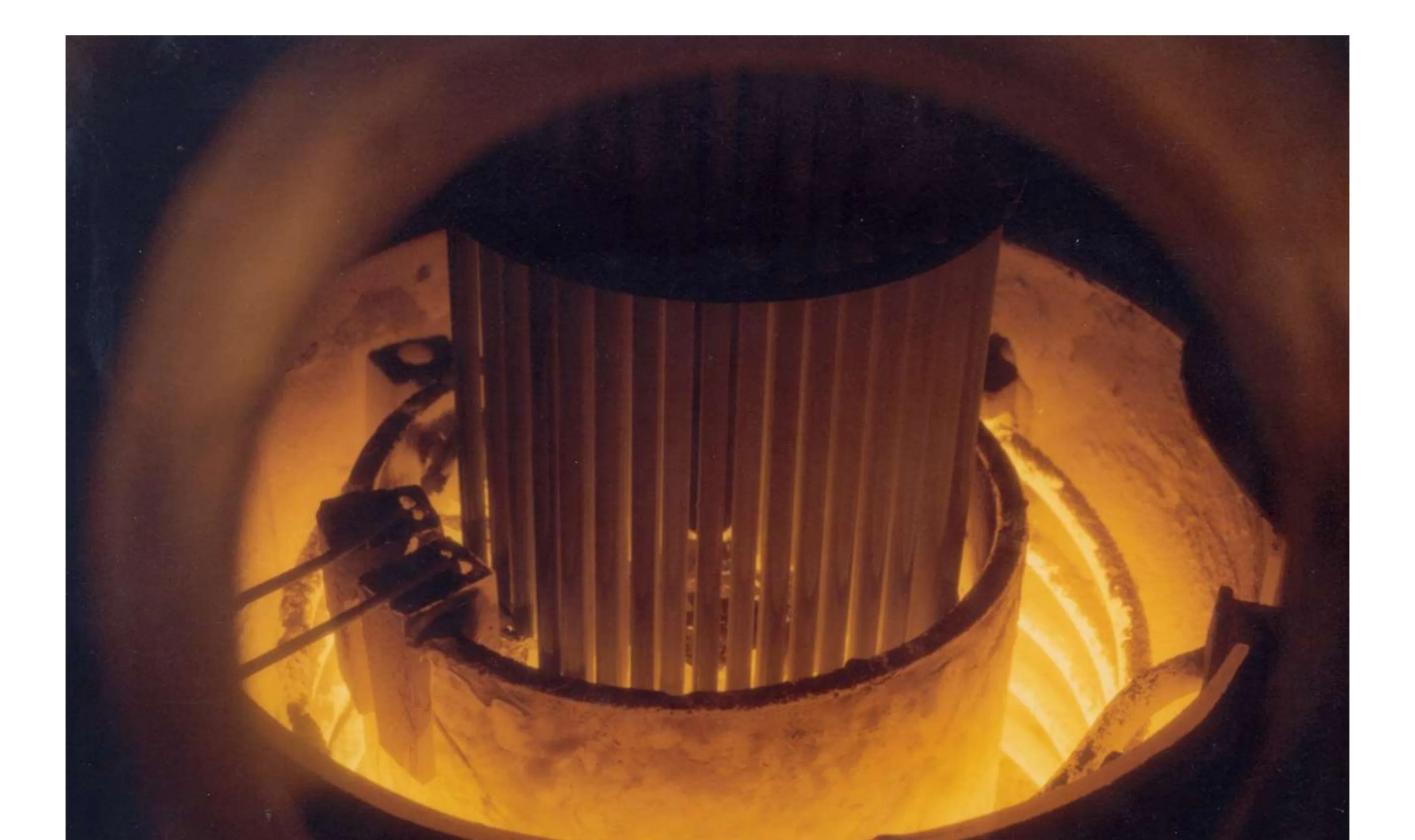
Injection casting fabrication — molten metal fuel rods being cast at Argonne National Laboratory
Injection Casting Equipment
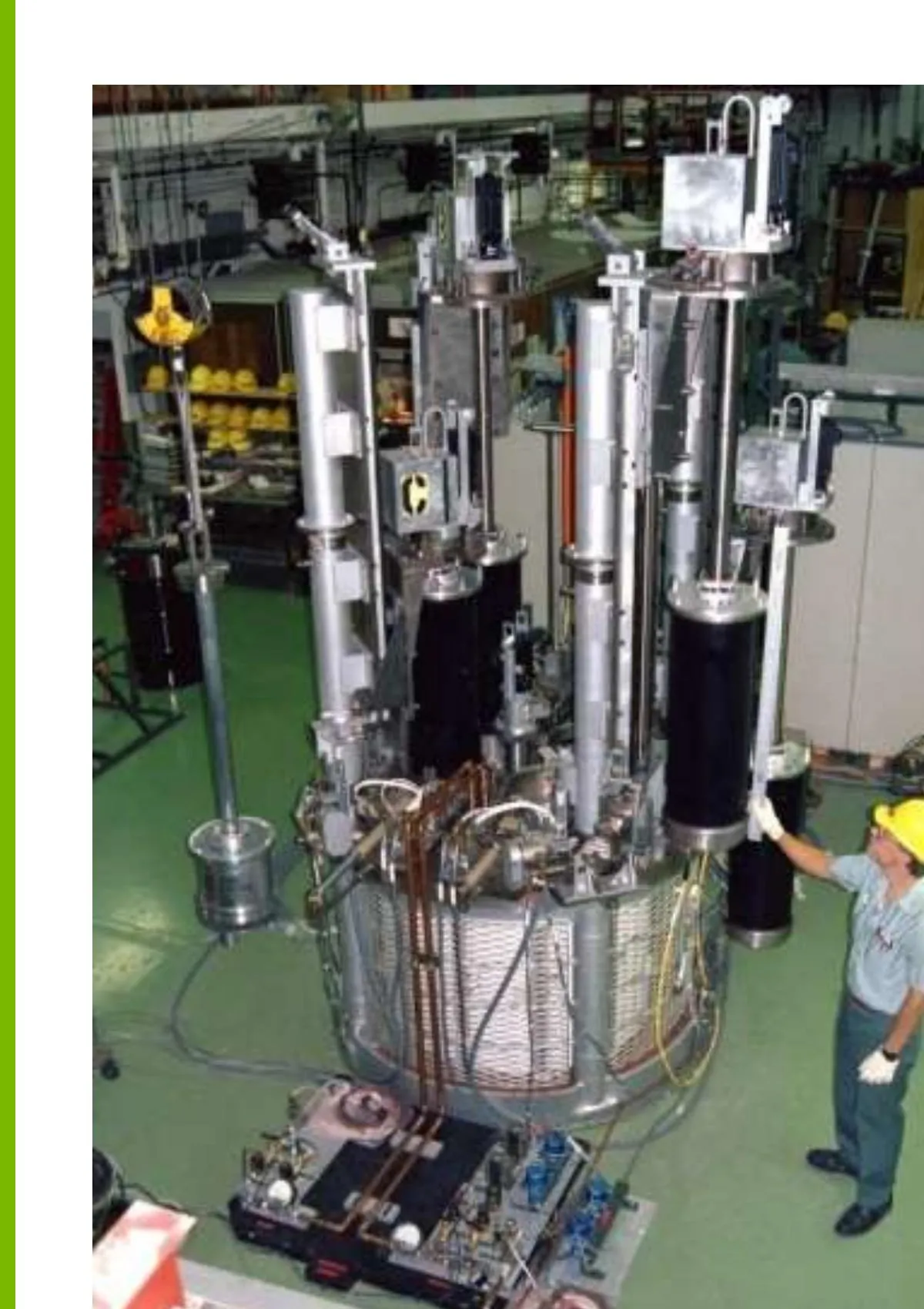
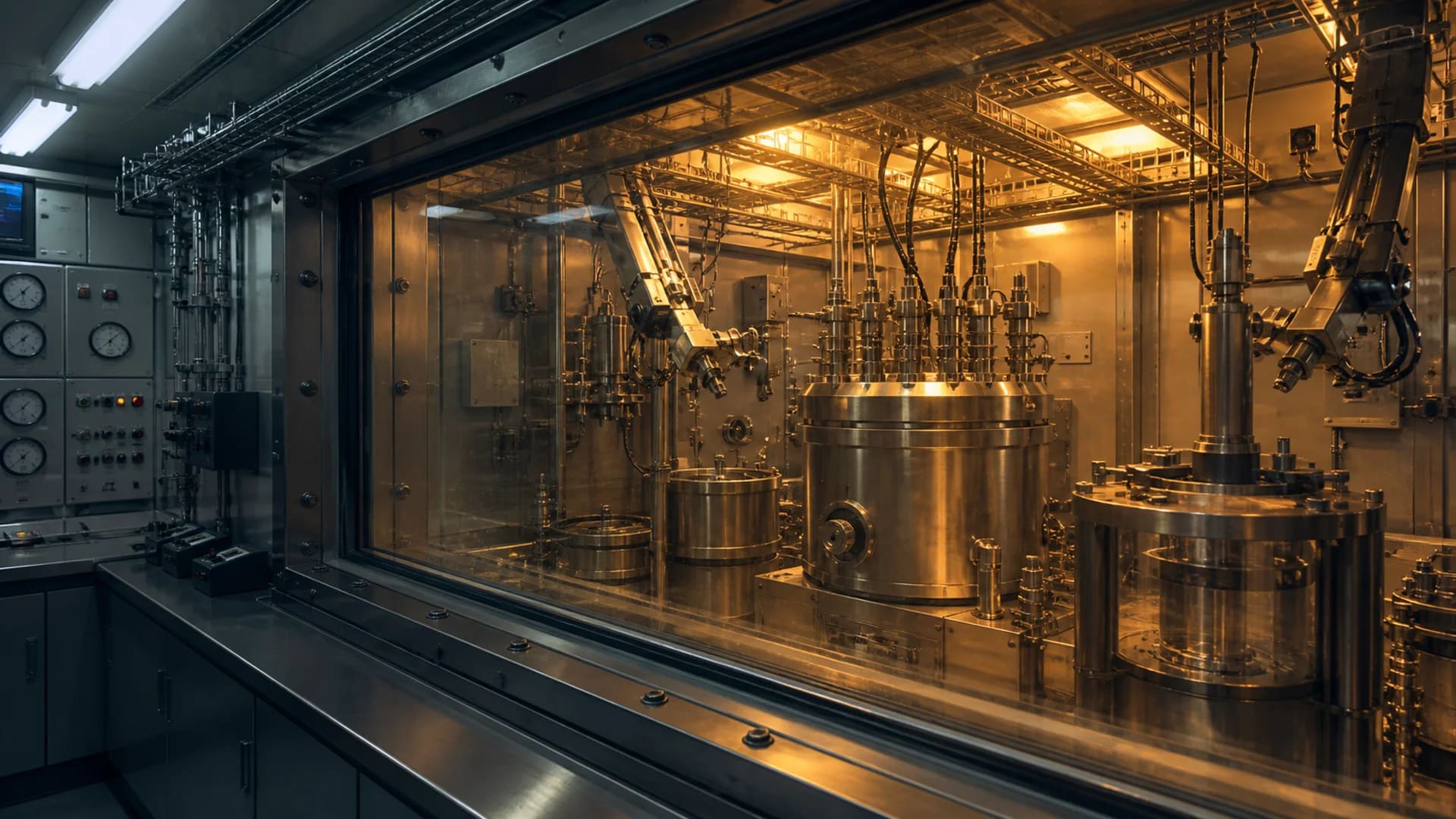
Engineering-scale electrorefiner at Argonne National Laboratory
Electrorefiner — Molten Salt Bath
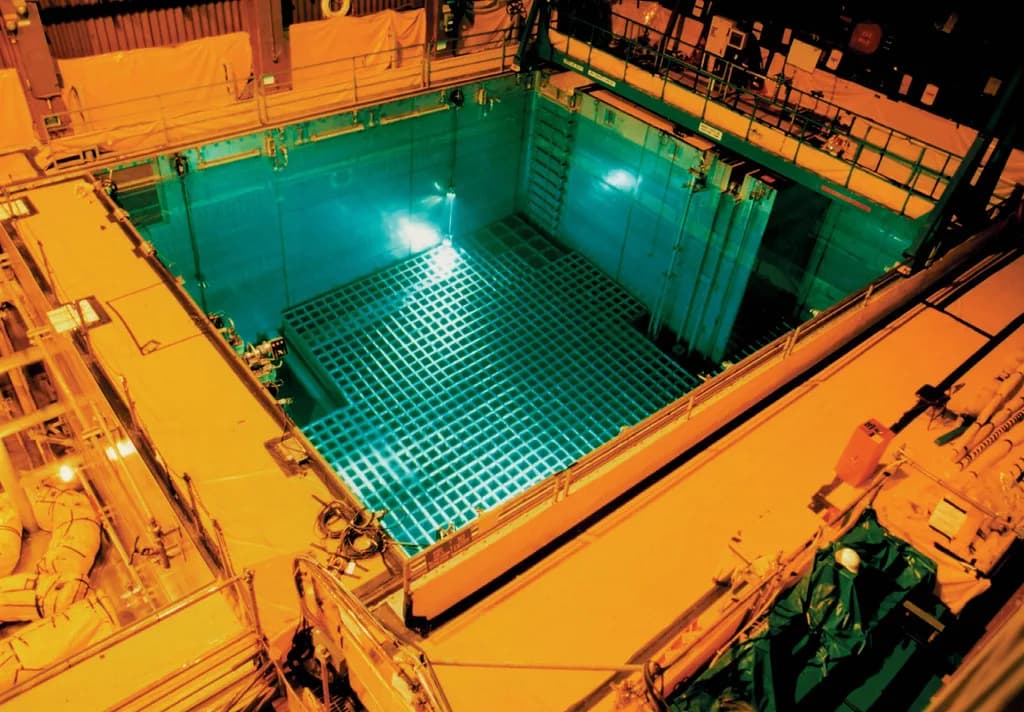
Used nuclear fuel storage pool with blue Cherenkov radiation glow
Used Fuel Pool — Cherenkov Glow
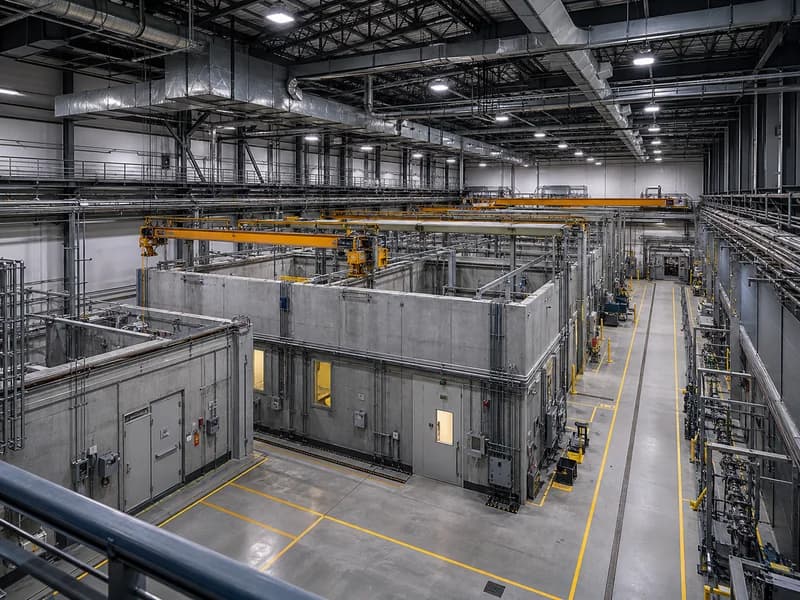
Fuel Conditioning Facility interior floor plan
Fuel Conditioning Facility

BLSK's pilot facility isn't proving whether pyroprocessing works — that was demonstrated decades ago at Argonne's Fuel Conditioning Facility. The pilot facility is perfecting an already proven process and preparing for commercial-scale operations at 400 to 2,000 tonnes per year.

What the Pilot Facility Produces

Receive Used Nuclear Fuel

  • Each PWR fuel assembly contains about 500 kg of uranium
  • One PWR reactor discharges 40–60 assemblies per year (21.5 tonnes)
  • America's 93 reactors discharge about 2,000 tonnes per year
  • Pilot processes 100 tonnes of heavy metal per year — about 200 PWR fuel assemblies

Pilot Facility Output (per year)

  • ~1,500 kg Pu/TRU — yielding ~7,500 kg of HALEU-equivalent metal fuel (20% TRU, 80% U) for fast reactors
  • ~4,500 kg fission products — vitrified for disposal; back to background radiation in ~300 years
  • ~94,000 kg U-238 — stored or available for advanced reactor fuel
  • Facility processes material for about 5,000 GWd of energy/year

Technology Impact

  • Pilot recycles ~5% of annual U.S. used fuel discharge
  • At 2,000 t/yr industrial scale: recycles 100% of annual U.S. UNF
  • Produces enough material to fuel TerraPower's 345 MWe Natrium reactor for 5 years
  • Material processed by the Pilot Facility provides 1.5× the energy needs of New York City

Sources: BLSK deck (2026), slide 9; Chang 2026

Why HALEU-Equivalent Metal Fuel Works for Fast Reactors

Same fissile function (Pu-239 vs U-235)

296,000 tHM feedstock exists today

No enrichment infrastructure needed

Reduces waste while making fuel

Source: INL Fuel Cycle Analysis; BLSK deck (2026), slide 13

This is not a laboratory concept. EBR-II demonstrated fuel cycle closure from 1964 to 1969. The Fuel Conditioning Facility was refurbished in 1996 and has been in continuous operation — processing real irradiated fuel — ever since.

TRL-7Technology estimated at TRL-7 based on decades of research and more than $1 billion in U.S. Government investment

Sources: Chang 2026, slides 11–14; ANL technical publications; "Plentiful Energy" (Till & Chang); BLSK deck (2026)

Today, Only One Technology Meets All Four Requirements for Next-Generation Nuclear

There are four imperatives that any true next-generation nuclear system must satisfy. No current commercial reactor — and no proposed advanced reactor or SMR — meets all four simultaneously. The fast reactor with pyroprocessing is the only system that does.

Imperative 1: Inherent Safety

The core disruptive accident probability for current reactors is approximately 10⁻⁴ per reactor-year. With 440 reactors operating worldwide, that's statistically tolerable. But for a future fleet of 5,000 reactors, it implies a major accident every other year. In 1986, EBR-II demonstrated that a metal-fueled fast reactor shuts itself down safely — with no operator action and no safety system activation — for the two most severe accident scenarios.

10⁻⁴

Accident probability/reactor-year

This isn't an engineered safety system. It's physics.

Imperative 2: Waste Management Solution

Pyroprocessing recovers all actinides, reducing long-term radiological toxicity by a factor of 1,000. Effective waste lifetime drops from ~300,000 years to ~300 years. At 300 years, the waste is less radioactive than the original uranium ore it came from.

300,000 yrs

Current waste lifetime

300 yrs

After pyroprocessing

This transforms repository siting from an impossible political problem into a manageable engineering problem.

Imperative 3: Recycle Economics

The Landmark CRADA produced a detailed conceptual design demonstrating that pyroprocessing achieves an order-of-magnitude improvement in recycling economics compared to conventional aqueous reprocessing. Detailed cost estimates are available under NDA.

Imperative 4: Inexhaustible Energy

Current reactors use 0.6% of uranium resources. Fast reactors, with pyroprocessing enabling continuous fuel recycling, can utilize essentially all uranium — extending resource availability by more than 100-fold. The more than 95,000 metric tonnes of used fuel in U.S. storage alone represents hundreds of years of American electricity. Combined with 600,000 metric tonnes of depleted uranium tailings, the total domestic resource represents over a thousand years of energy independence.

0.6%

Current utilization

~100%

Fast reactor utilization

1,000+ yrs

With DU tailings

That is, for practical purposes, inexhaustible.

No current commercial reactor — and no proposed advanced reactor or SMR — can satisfy all four simultaneously. The fast reactor with pyroprocessing is the only system that does.

Sources: Chang 2026, slides 21–26, 32, 35

Waste Disposal: How the Methods Compare

0.1%

Radiological Toxicity

Pyroprocessing vs. 100% for direct disposal

10–20%

Repository Size Needed

vs. 100% for conventional methods

Waste Disposal: How the Methods Compare
MetricPyroprocessingAqueous (PUREX)Direct Disposal
Metric: Fuel Recovery¹. Pyroprocessing: 95%+. Aqueous (PUREX): 95%. Direct Disposal: 0%.
Metric: Waste Sent to Disposal¹. Pyroprocessing: ~5%. Aqueous (PUREX): ~5%. Direct Disposal: 100%.
Metric: Radiological Toxicity². Pyroprocessing: 0.1%. Aqueous (PUREX): 98%. Direct Disposal: 100%.
Metric: Physical Volume³. Pyroprocessing: similar. Aqueous (PUREX): similar. Direct Disposal: similar.
Metric: Repository Size⁴. Pyroprocessing: 10–20%. Aqueous (PUREX): 100%. Direct Disposal: 100%.
  1. ¹ Pyroprocessing recovers minor actinides (Np, Am, Cm) along with Pu and U. Aqueous reprocessing (PUREX) recovers Pu and U but leaves minor actinides in the waste stream.
  2. ² A 1,000× reduction in radiological toxicity is the single most important differentiator — it enables repository regulatory requirements to be satisfied a priori without source-term analysis.
  3. ³ Physical volume of finished waste packages is comparable across all methods. Volume is not the key metric — repository spacing is.
  4. ⁴ Repository size is dictated by far-field temperature rise over hundreds of years. Pyroprocessing waste heat comes primarily from Cs and Sr (~30-year half-life), which decays quickly. Direct disposal and aqueous waste generate cumulative heat that grows for centuries. Thermal analysis allows 5–10× more pyroprocessed waste in the same repository space.

Source: BLSK Energy internal calculations

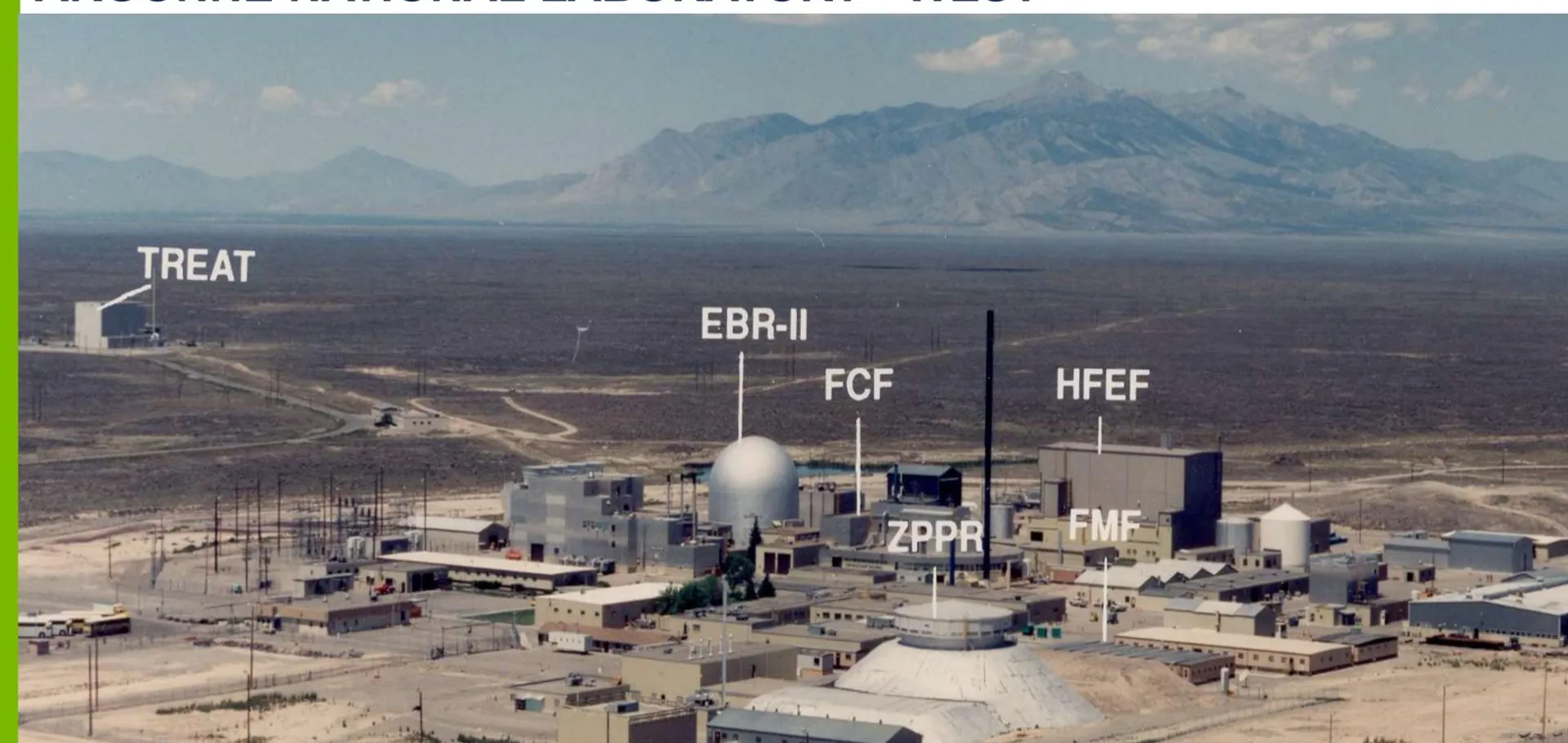
Aerial photograph of Argonne National Laboratory West, now part of Idaho National Laboratory, showing EBR-II, Fuel Conditioning Facility, HFEF, and TREAT reactor facilities
Argonne National Laboratory West (now Idaho National Laboratory) — where pyroprocessing was invented, demonstrated, and proven over six decades.

Technology Validation Timeline

From the world's first controlled nuclear chain reaction to today's active CRADA — over 80 years of continuous advancement, all rooted at Argonne National Laboratory.

  1. 1942

    Chicago Pile-1

    World's first controlled nuclear chain reaction (Argonne/U of Chicago)

  2. 1951

    EBR-I

    First electricity from nuclear energy; breeding principle demonstrated 1953

  3. 1964–1969

    EBR-II Fuel Cycle

    Demonstrated full fuel cycle closure

  4. 1986

    EBR-II Safety Tests

    Landmark inherent passive safety demonstration — reactor self-shutdown

  5. 1996–Present

    Fuel Conditioning Facility

    Engineering-scale fuel treatment in continuous operation

  6. 2013–2018

    Landmark CRADA

    Conceptual design of 100 T/yr and 400 T/yr pyroprocessing facilities

  7. 2024–Present

    BLSK CRADA (A25591)

    Detailed engineering design, NRC licensing pathway, 60-month program

Sources: Chang 2026, slides 2–5, 10–12, 15; CRADA public abstract

The science is settled. The engineering is proven. The question is commercialization.